Sensory System
Where the world gets inOrgana sensuum
Specialised receptors that convert light, sound, pressure, temperature, and chemistry into the one language the brain reads.
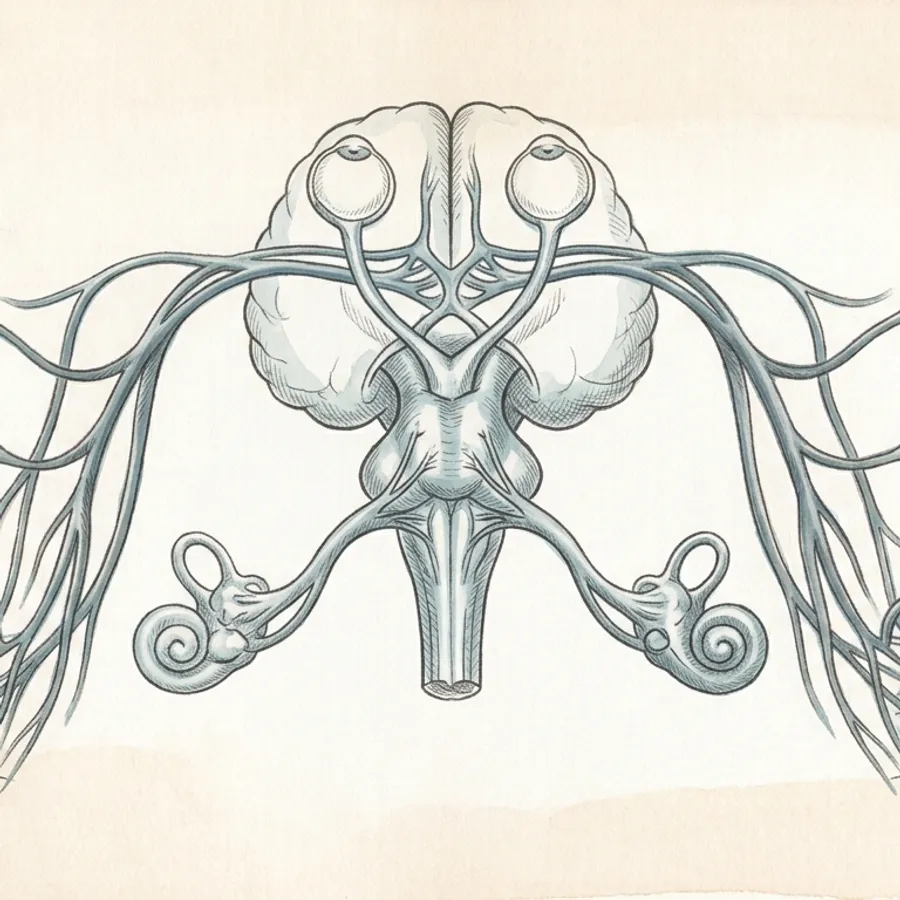
- Primary role
- Converts physical stimuli into neural signals
- Scale
- Over 100 million photoreceptors per eye
- Every day
- Around 100,000 eye movements
Organs in this atlas 1
How it works as a whole
Every sense is a translation problem. A photon, a pressure wave, and a molecule have nothing in common, yet each must become the same thing — a pattern of nerve impulses. Receptors solve this by having a structure that a particular kind of energy can physically deform or trigger: a bent hair cell, a photopigment that changes shape under light, a channel that opens under stretch. What reaches the brain is never the world itself, only a heavily edited report about it.
Other key structures
- CochleaSorts sound into frequencies along a coiled, tuned membrane
- Vestibular organsReport head tilt and acceleration — the sense of balance
- Olfactory epitheliumHundreds of receptor types combining into millions of smells
- Cutaneous receptorsTouch, pressure, vibration, temperature, and pain in the skin
Connected systems
- Nervous SystemIts input layer — the retina is an outgrowth of the brain itself
- Integumentary SystemSkin is the largest sensory surface in the body
- Cardiovascular SystemThe retina is the only place vessels can be viewed directly
Common conditions
- Hearing loss
- Cataract
- Glaucoma
- Vertigo
- Anosmia
- Neuropathic pain
The through-lineThe senses are not independent channels — the brain fuses them, and where they disagree it picks a winner. Flavour is mostly smell; balance is vision and the inner ear arguing; and motion sickness is what happens when they cannot be reconciled.
Did you knowThe blind spot where the optic nerve leaves the retina is genuinely blind — the brain simply invents what should be there.
The path through this system
0 of 9 steps done — read it, walk it in 3D, then be asked about it.
Start: Eye: the lesson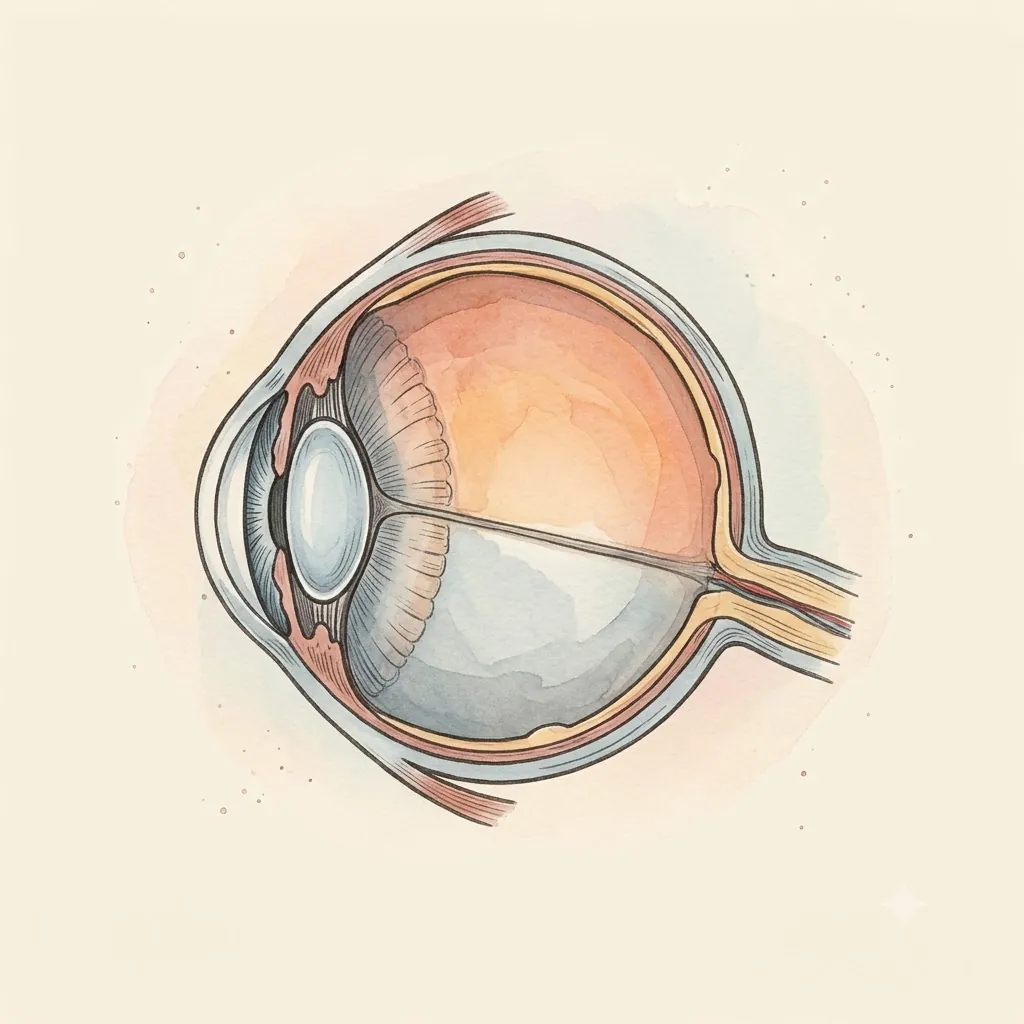 ReadEye: the lesson
Structure and story of the eye, layer by layer.
3 min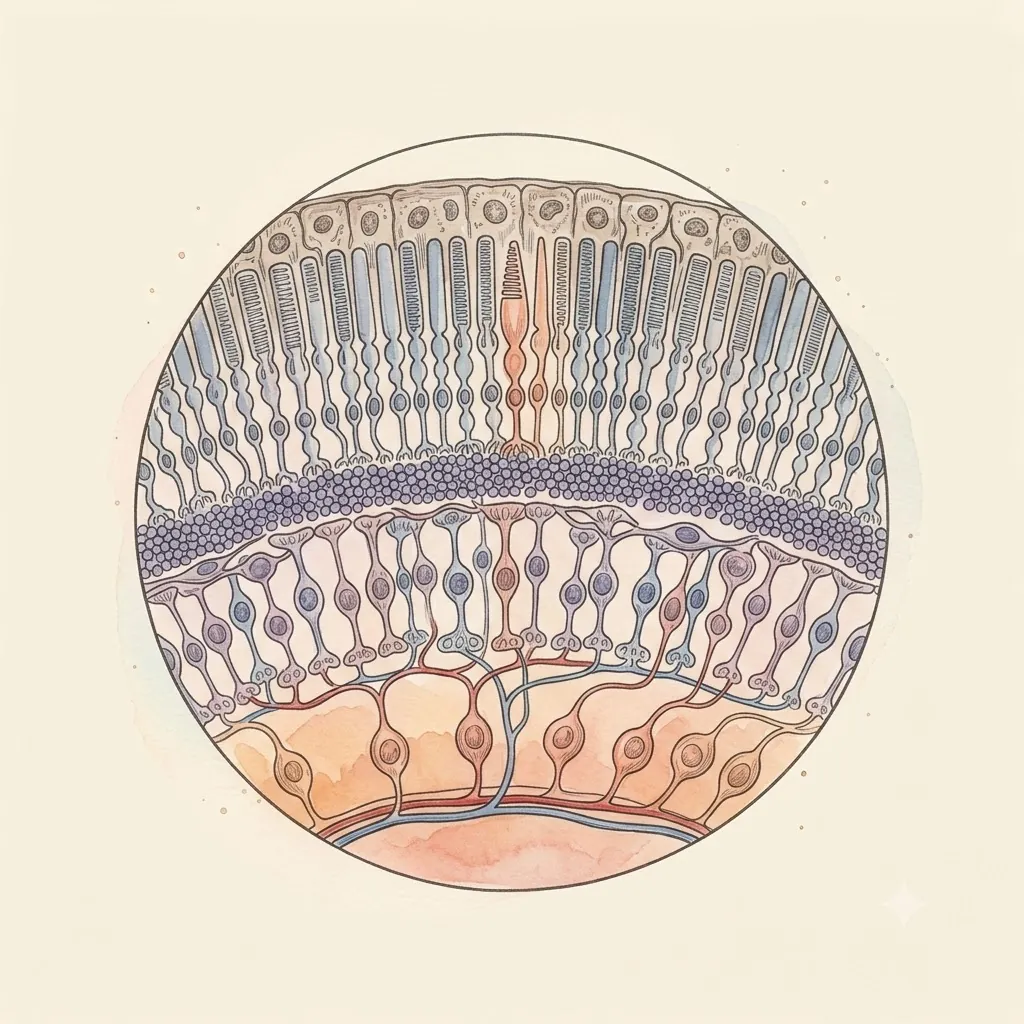 Guided walk-throughGuided dissection: eye
Walk the eye structure by structure, then cut inward layer by layer.
6 min Memo cardsEye memo cards
Turn the cards on the eye — structures, layers, key facts — and grade yourself.
4 min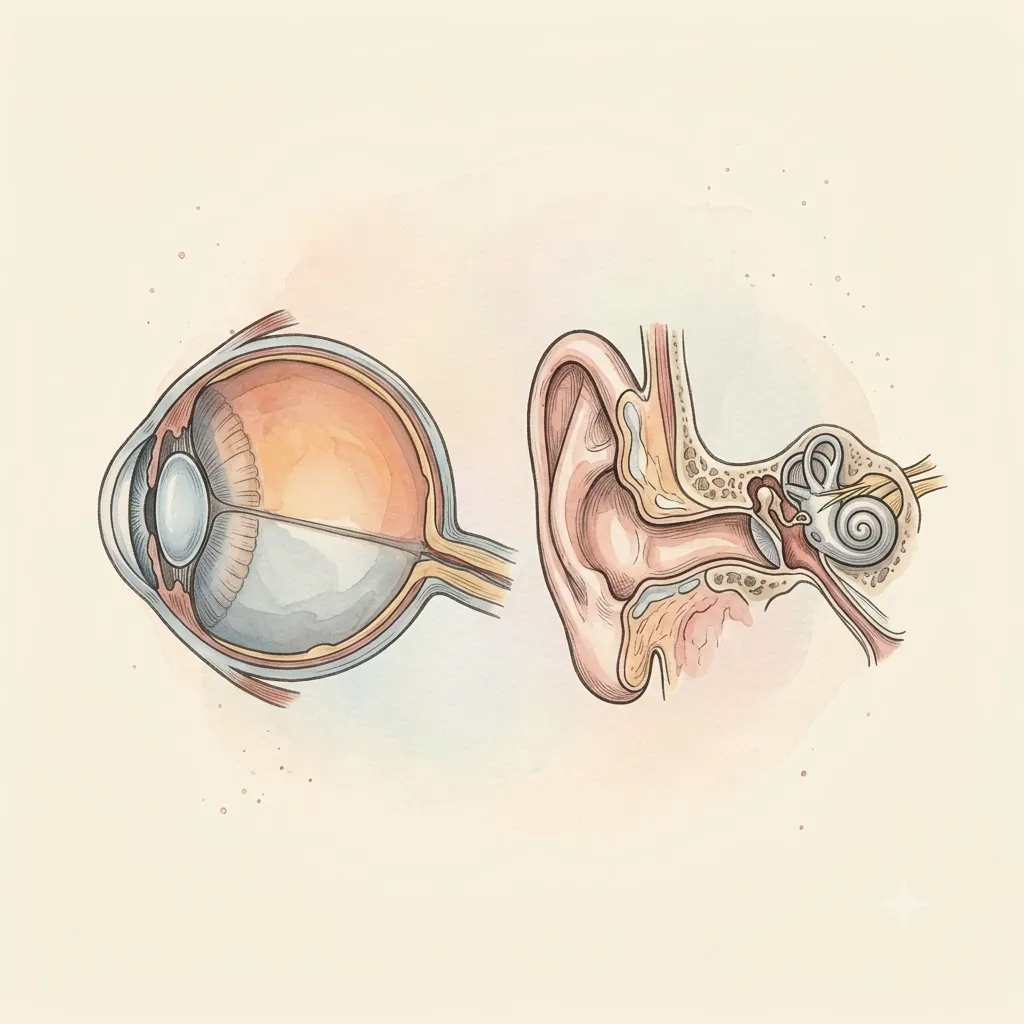
 Multiple choiceEye quiz
A multiple-choice round on the eye, reshuffled every time.
4 min Click on the 3D modelFind the eye structures
Click the named structures directly on the live 3D eye.
5 min Match layersMatch eye layers
Pair each layer of the eye, outside in, with what it does.
4 min Match pairsMatch eye structures
Pair each structure in the eye with its role.
4 min Multiple choiceSensory System quiz
A quiz pulling from every organ in the sensory system.
3 minReadEye in the clinicWhere the eye shows up in the clinic, and what goes wrong.
3 min