Musculoskeletal System
The frame that walksSystema musculoskeletale
206 bones, the joints between them, and the muscles that pull on them — the body's shape, its armour, and its only way of moving.
- Primary role
- Supports, protects, moves, and stores minerals
- Scale
- 206 bones, over 300 joints
- Every day
- The whole skeleton is replaced about every ten years
Organs in this atlas 2
How it works as a whole
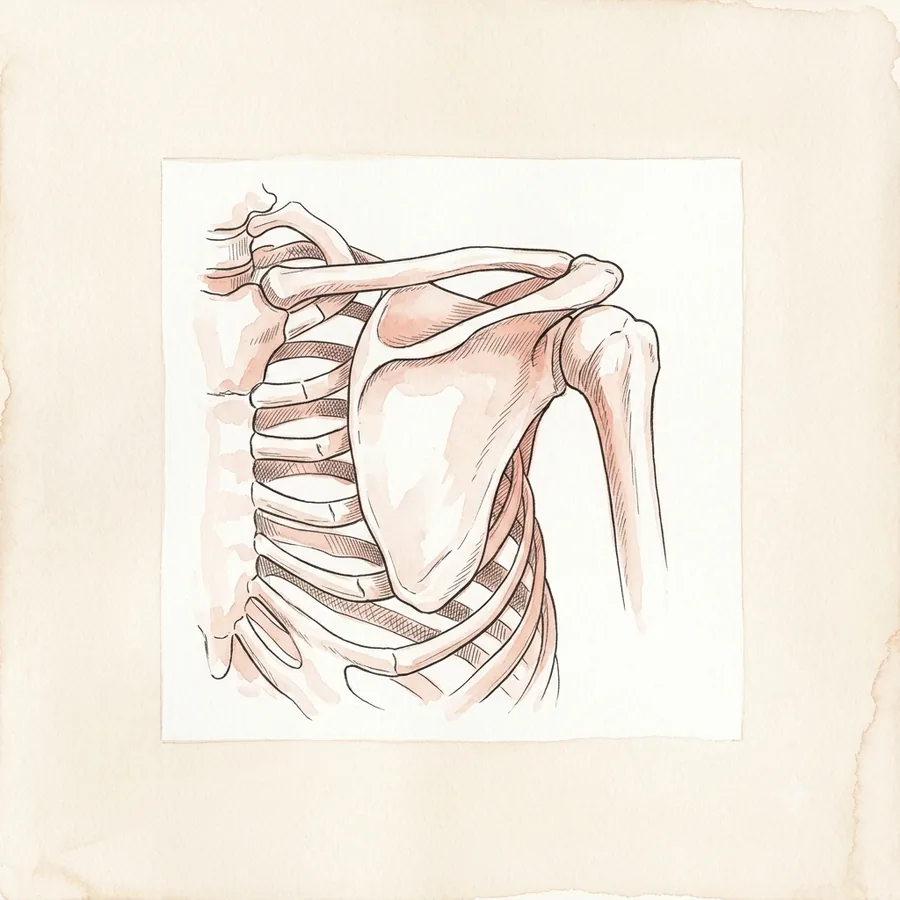
The skeleton is usually met as a coat rack, which gets it exactly backwards: it is living, vascular tissue that rebuilds itself continuously, banks almost all of the body's calcium, and manufactures every blood cell from marrow held inside it. Its 206 bones divide into an axial column of 80 — cranium, vertebrae, ribs and sternum — that shields the brain, cord, heart and lungs, and an appendicular set of 126 hung off it by two girdles, built for reach and stride rather than protection. Nothing in it moves on its own: bones are levers, joints are the fulcrums, and muscles supply the force.
Other key structures
- JointsWhere two bones meet — fibrous, cartilaginous, or the freely moving synovial kind
- CartilageThe near-frictionless bearing surface on joints, and the template most bones grow from
- LigamentsBone-to-bone straps that let a joint go one way and stop it going another
- Bone marrowRed marrow makes blood cells; yellow marrow is stored fat
Connected systems
- Cardiovascular SystemRed marrow inside the flat and short bones manufactures every red cell, platelet and white cell
- Endocrine SystemThe skeleton is the body's calcium bank — parathyroid hormone, vitamin D and calcitonin set the withdrawal rate
- Nervous SystemThe cranium and vertebral canal are the armour around the brain and spinal cord, and every movement is muscle answering a nerve
Common conditions
- Osteoporosis
- Osteoarthritis
- Rheumatoid arthritis
- Fractures
- Low back pain
- Scoliosis
The through-lineMovement is a chain of borrowed parts: a nerve fires, a muscle shortens, a tendon pulls a bone across a joint, and the joint's shape decides which way it can go. Take away any link and the others are useless.
Did you knowA newborn has around 270 bones; growing up fuses them down to 206 — the sacrum alone is five vertebrae welded into one.
The path through this system
0 of 17 steps done — read it, walk it in 3D, then be asked about it.
Start: Muscles: the lesson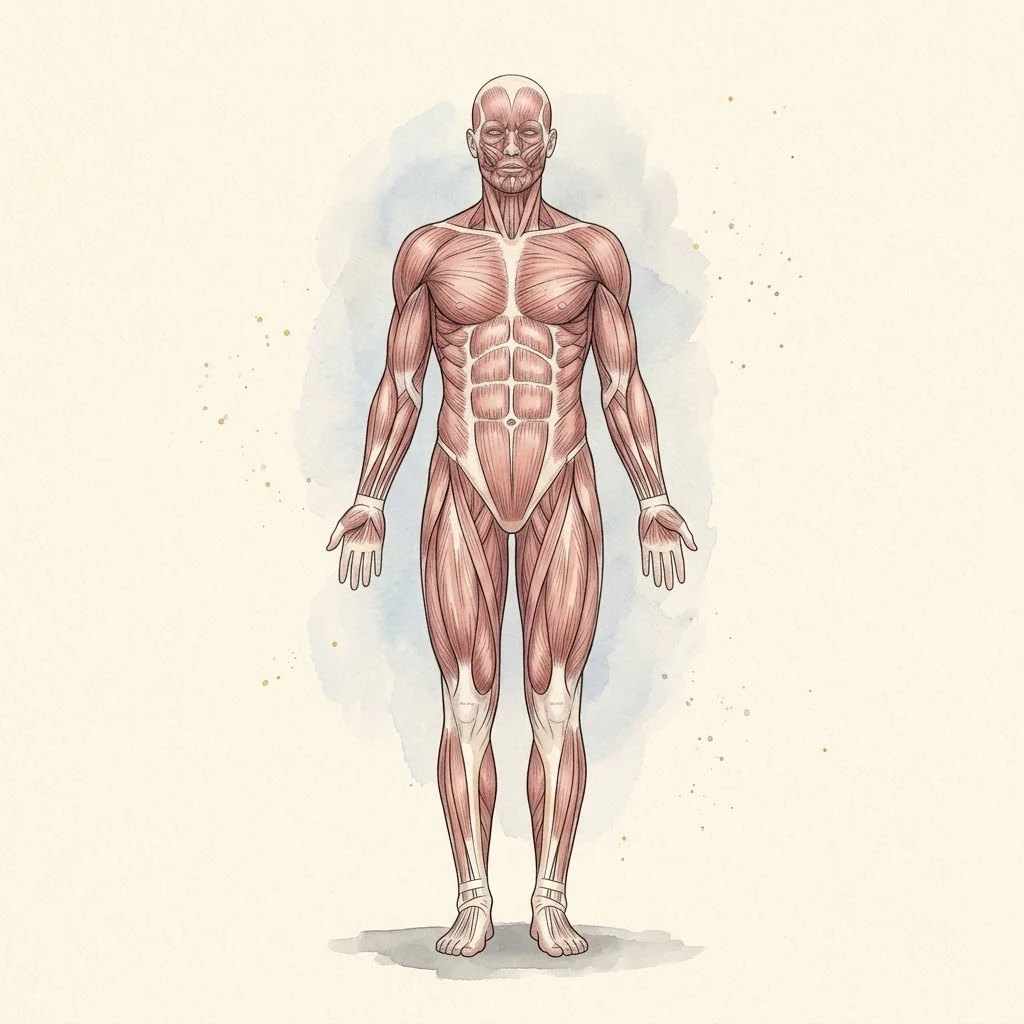 ReadMuscles: the lesson
Structure and story of the muscles, layer by layer.
3 min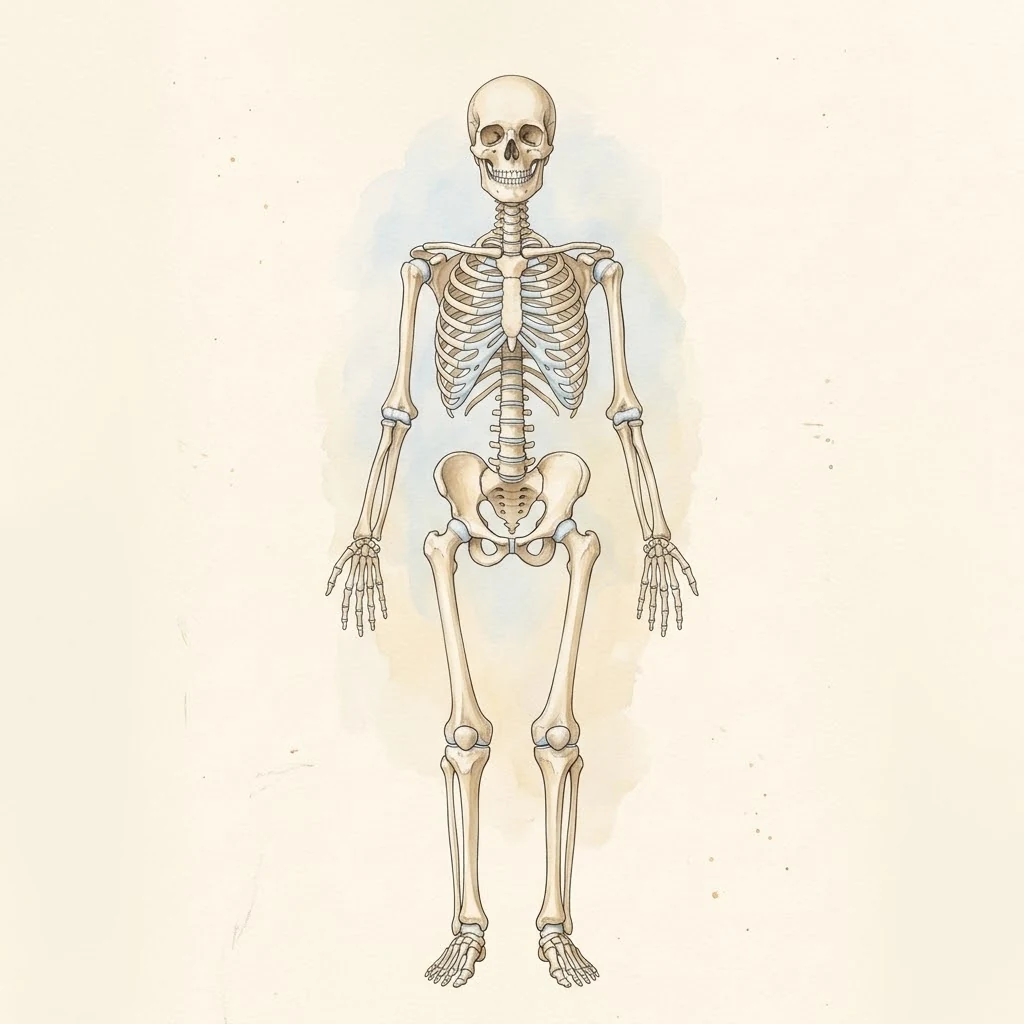 ReadSkeleton: the lesson
Structure and story of the skeleton, layer by layer.
3 min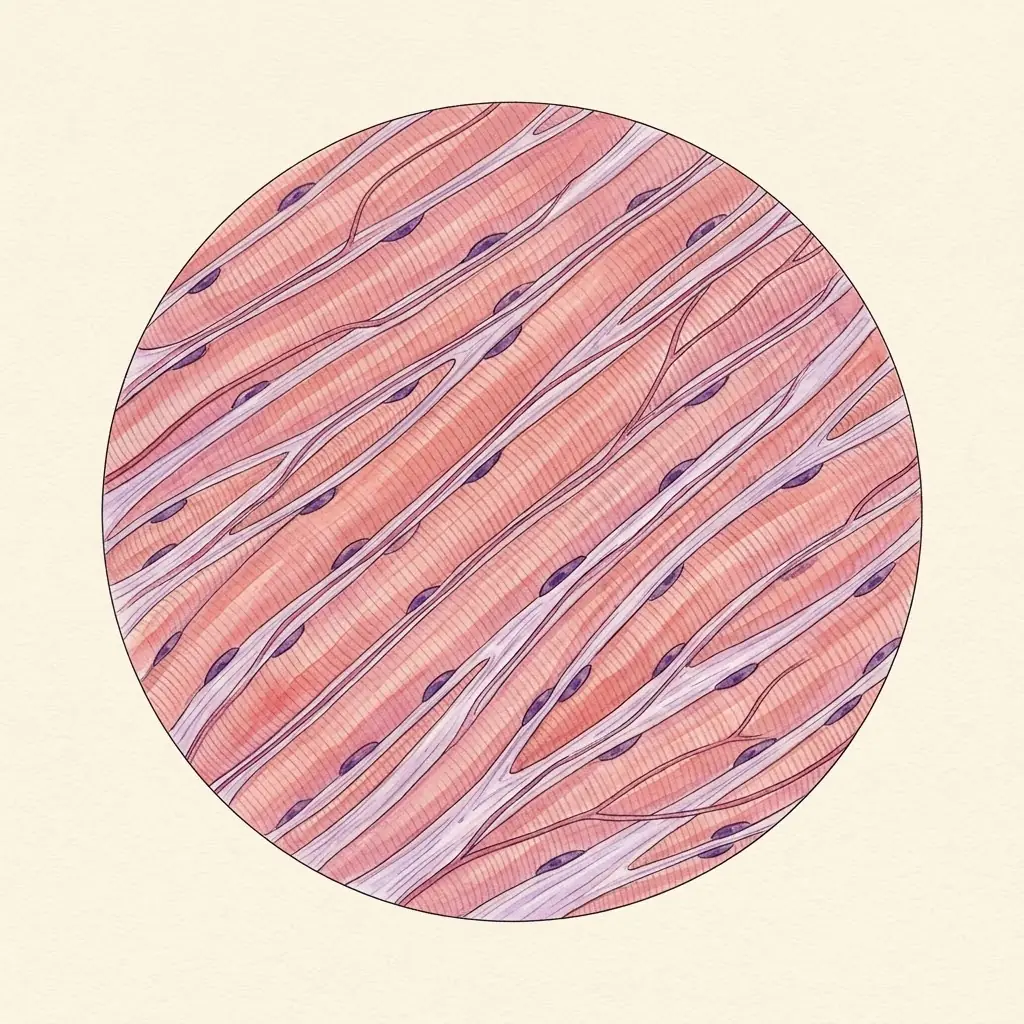 Guided walk-throughGuided dissection: muscles
Walk the muscles structure by structure, then cut inward layer by layer.
6 min Guided walk-throughGuided dissection: skeleton
Walk the skeleton structure by structure, then cut inward layer by layer.
6 min Memo cardsMuscles memo cards
Turn the cards on the muscles — structures, layers, key facts — and grade yourself.
4 min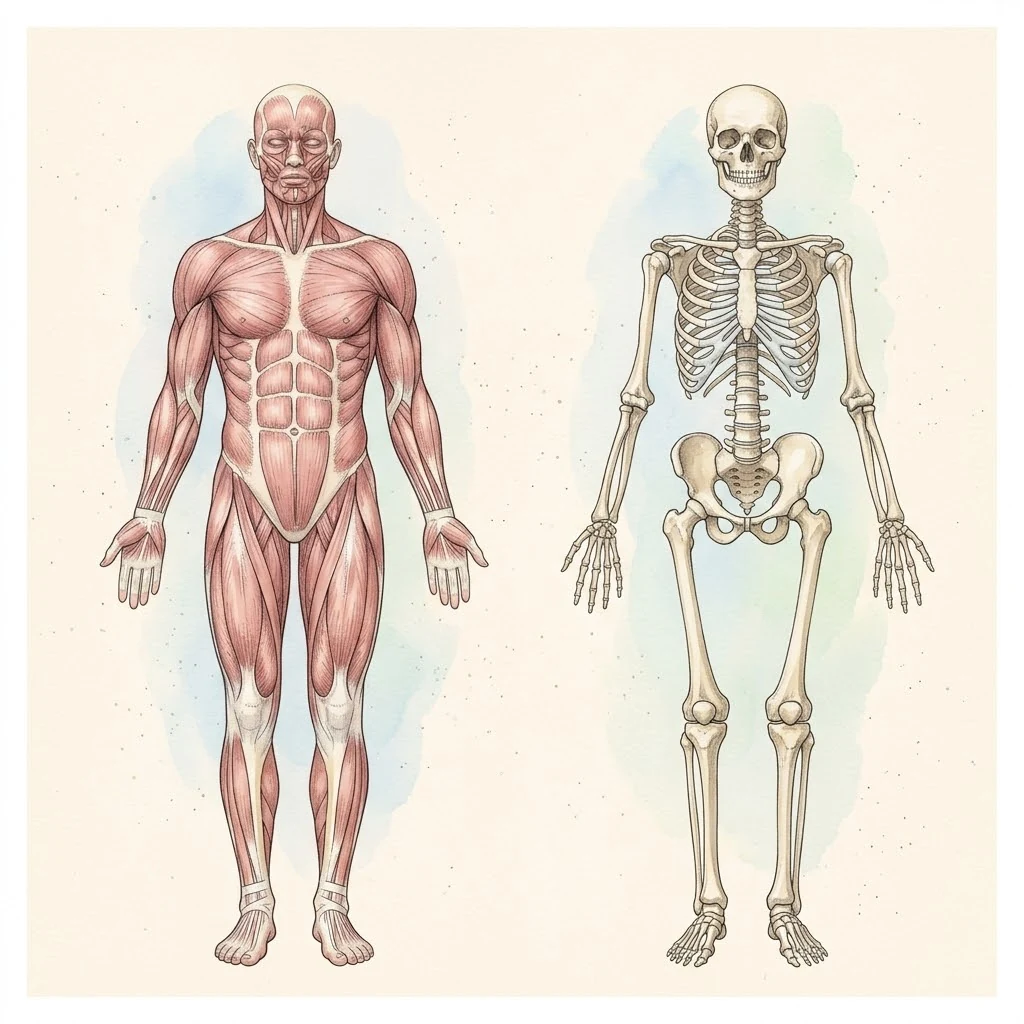
 Multiple choiceMuscles quiz
A multiple-choice round on the muscles, reshuffled every time.
4 min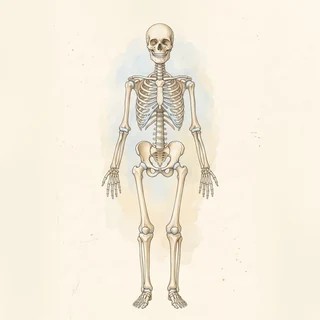 Memo cardsSkeleton memo cards
Turn the cards on the skeleton — structures, layers, key facts — and grade yourself.
4 min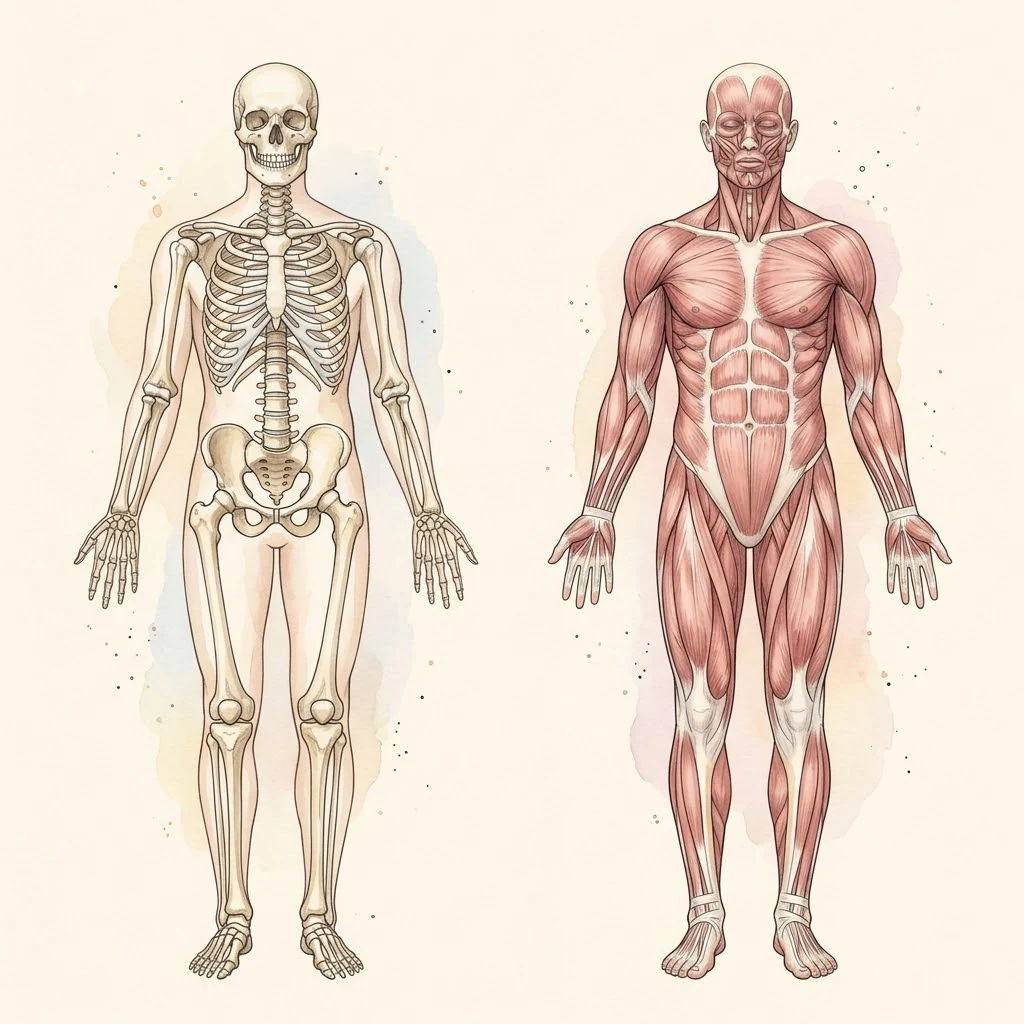 Multiple choiceSkeleton quiz
A multiple-choice round on the skeleton, reshuffled every time.
4 min Click on the 3D modelFind the muscles structures
Click the named structures directly on the live 3D muscles.
5 minClick on the 3D modelFind the skeleton structuresClick the named structures directly on the live 3D skeleton.
5 min Match layersMatch muscles layers
Pair each layer of the muscles, outside in, with what it does.
4 min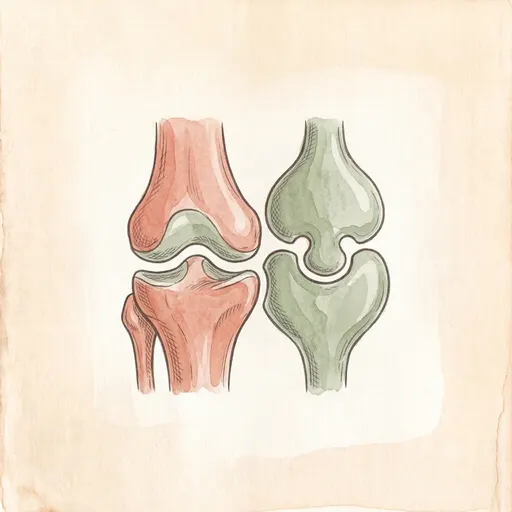 Match pairsMatch muscles structures
Pair each structure in the muscles with its role.
4 minMatch layersMatch skeleton layersPair each layer of the skeleton, outside in, with what it does.
4 minMatch pairsMatch skeleton structuresPair each structure in the skeleton with its role.
4 min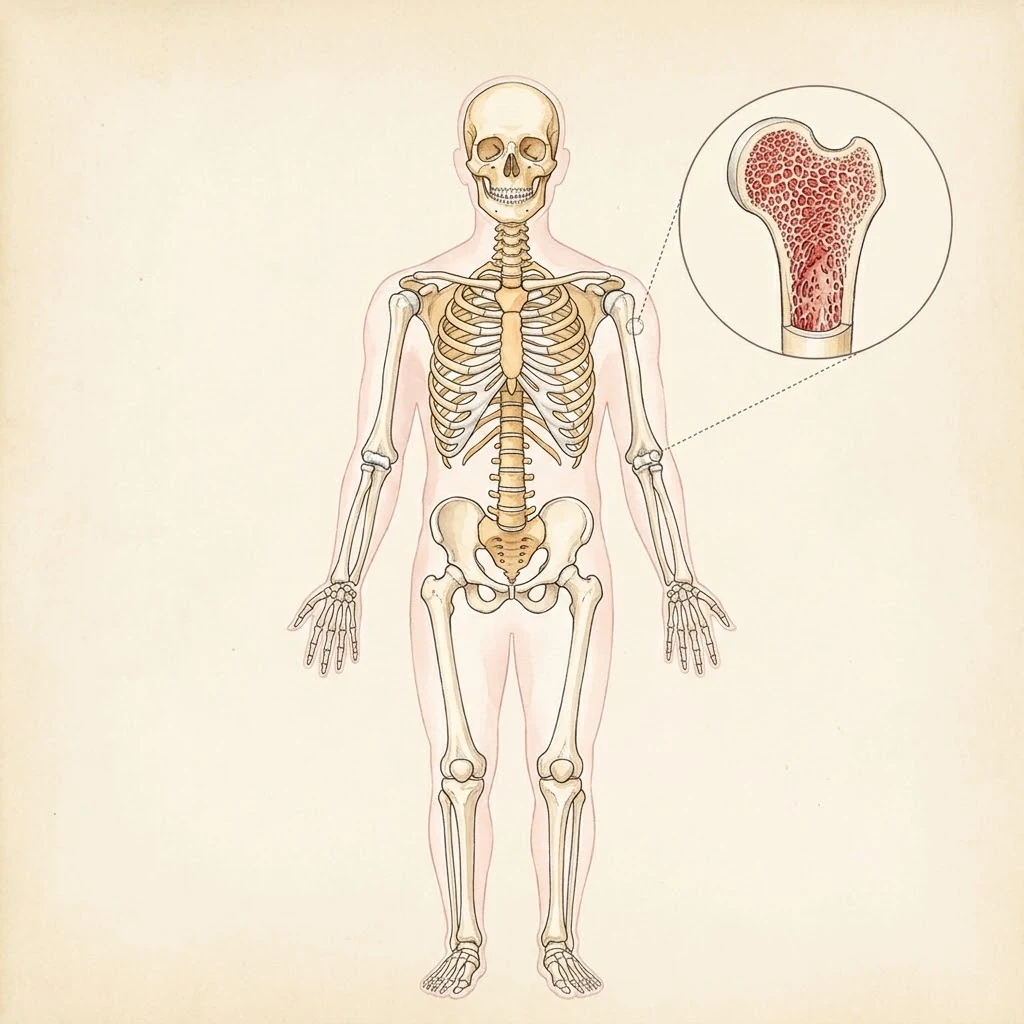 Multiple choiceMusculoskeletal System quiz
A quiz pulling from every organ in the musculoskeletal system.
4 min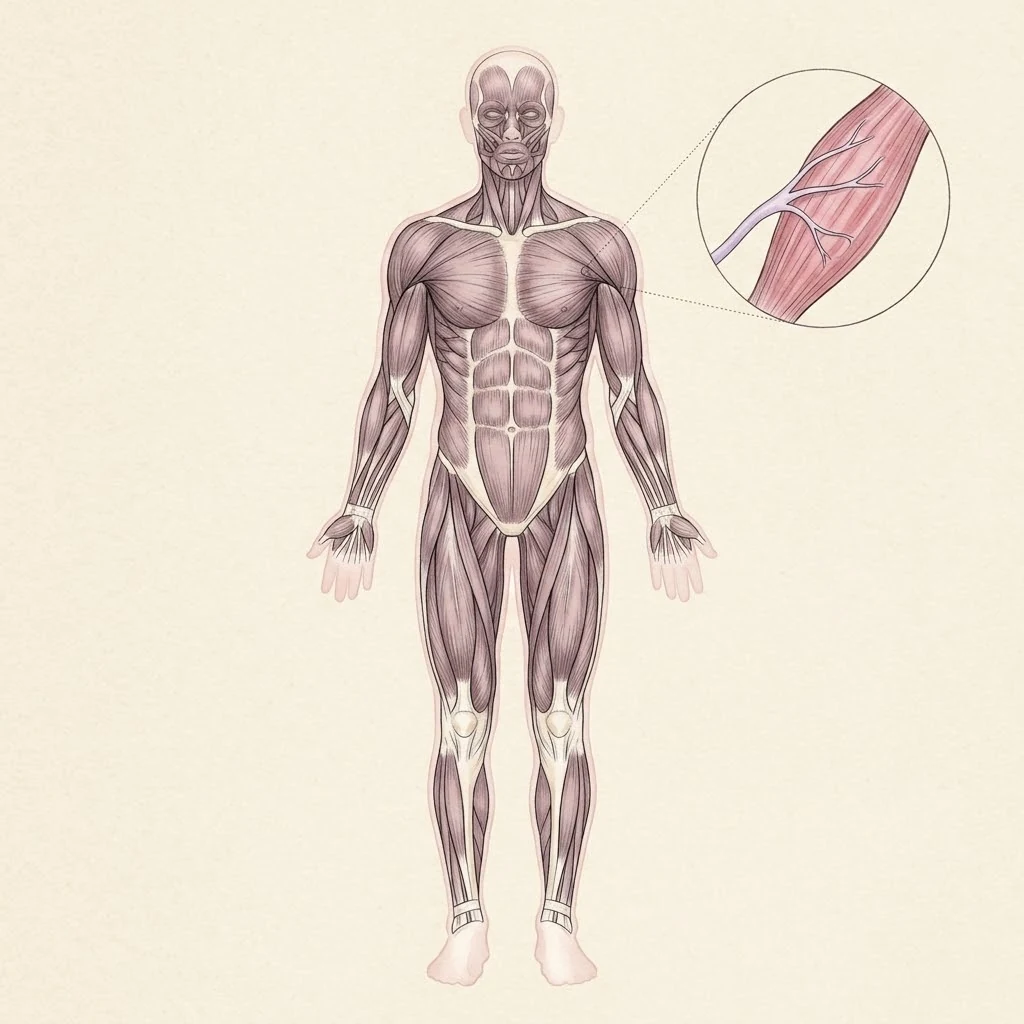 ReadMuscles in the clinic
Where the muscles shows up in the clinic, and what goes wrong.
3 minReadSkeleton in the clinicWhere the skeleton shows up in the clinic, and what goes wrong.
3 min