Integumentary System
The edge of youIntegumentum commune
Skin, hair, and nails — a self-repairing barrier that keeps water in, pathogens out, and reads the world by touch.
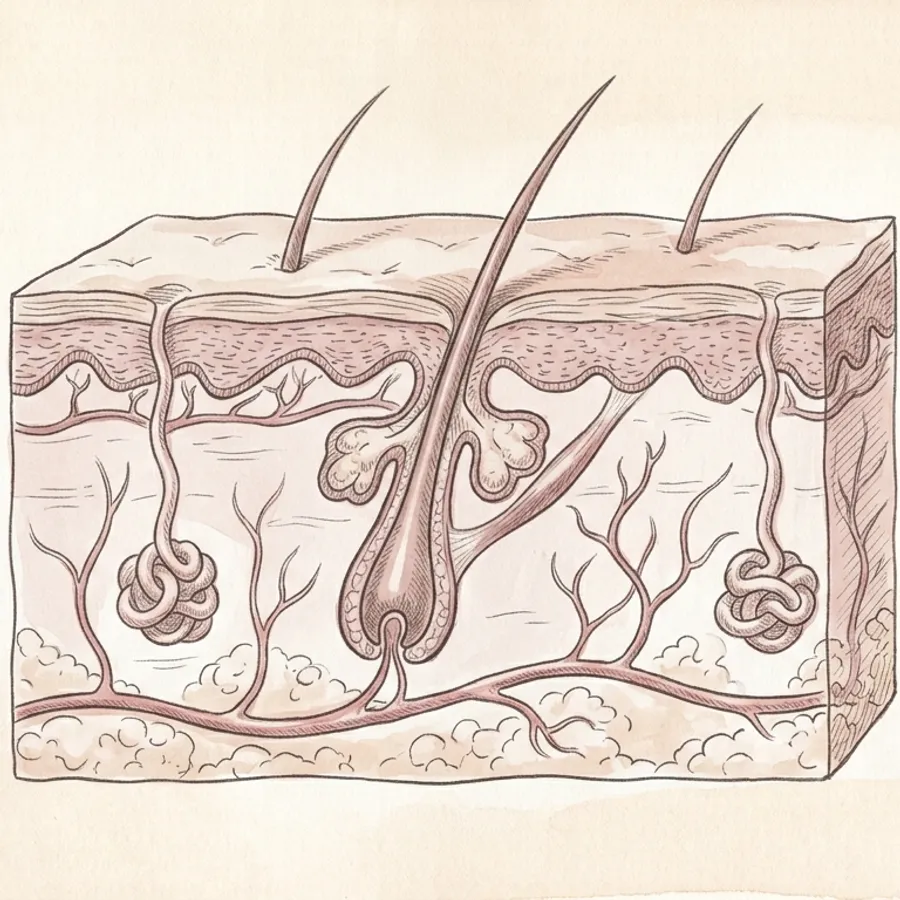
- Primary role
- Protects, senses, and regulates temperature
- Scale
- About 2 m², 3.5–5 kg
- Every day
- Sheds ~500 million cells
Organs in this atlas 1
How it works as a whole
Skin is the body's largest organ and its least appreciated one, doing at least six jobs at once: waterproofing, immune defence, temperature control, vitamin D synthesis, sensation, and repair. It manages this in three layers — a dead, constantly shed outer shield; a living dermis full of vessels, nerves, and glands; and a fatty base for insulation and padding. Its outermost cells are not alive, which is precisely the point: the barrier is built from its own casualties.
Other key structures
- Hair folliclesAnchor hair, host stem cells, and help repair wounds
- Sweat glandsCooling by evaporation — the body's main thermostat
- Sebaceous glandsOil that waterproofs skin and hair and holds bacteria in check
- NailsHardened keratin plates that stiffen the fingertip for grip
Connected systems
- Sensory SystemCarries touch, pressure, temperature, and pain receptors throughout
- Cardiovascular SystemDermal vessels shunt blood to shed or conserve heat
- Endocrine SystemStarts vitamin D synthesis, which the kidney later finishes
Common conditions
- Eczema
- Psoriasis
- Melanoma
- Cellulitis
- Burns
- Chronic wounds
The through-lineThermoregulation is a whole-body collaboration run through skin: vessels widen or clamp down to dump or hoard heat, sweat glands open, and hair muscles contract — all directed by the hypothalamus.
Did you knowFingerprints form in the womb from the way skin buckles as it grows, which is why identical twins do not share them.
The path through this system
0 of 9 steps done — read it, walk it in 3D, then be asked about it.
Start: Skin: the lesson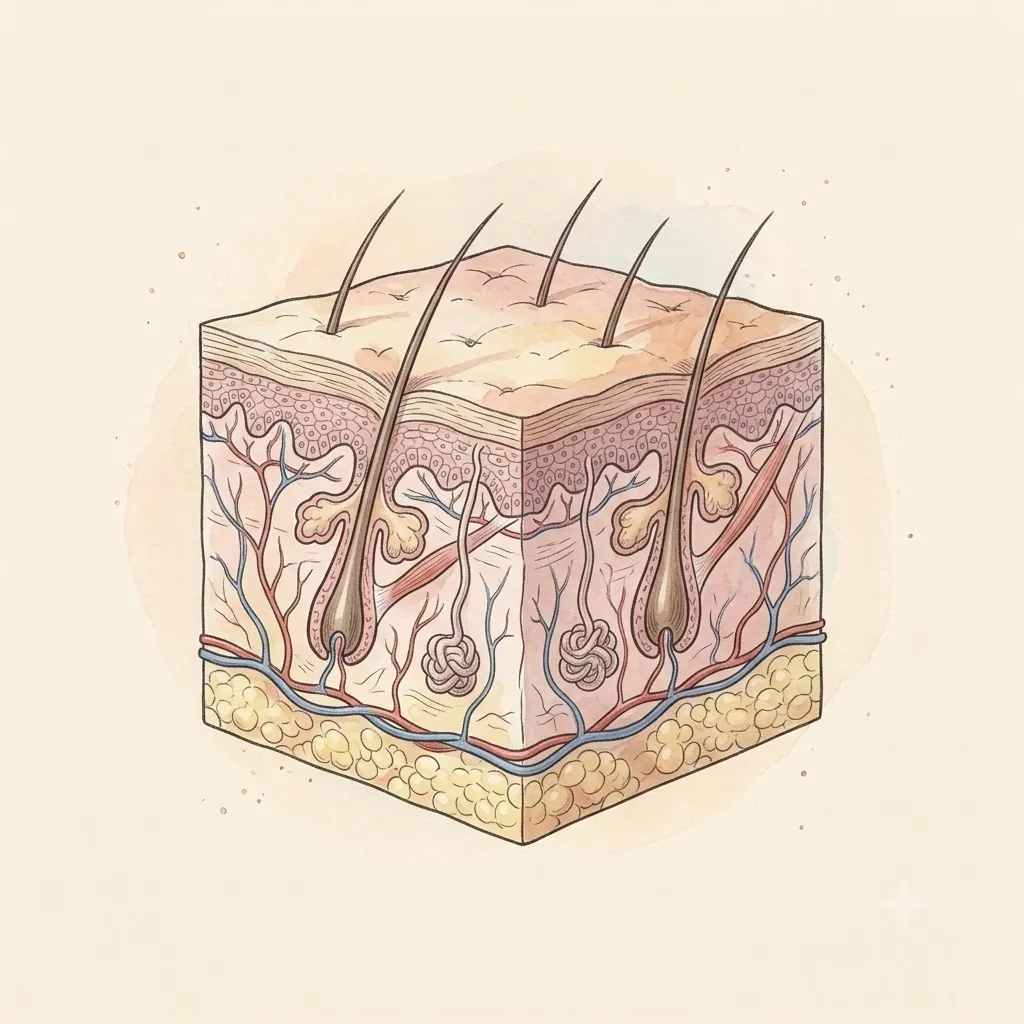 ReadSkin: the lesson
Structure and story of the skin, layer by layer.
3 min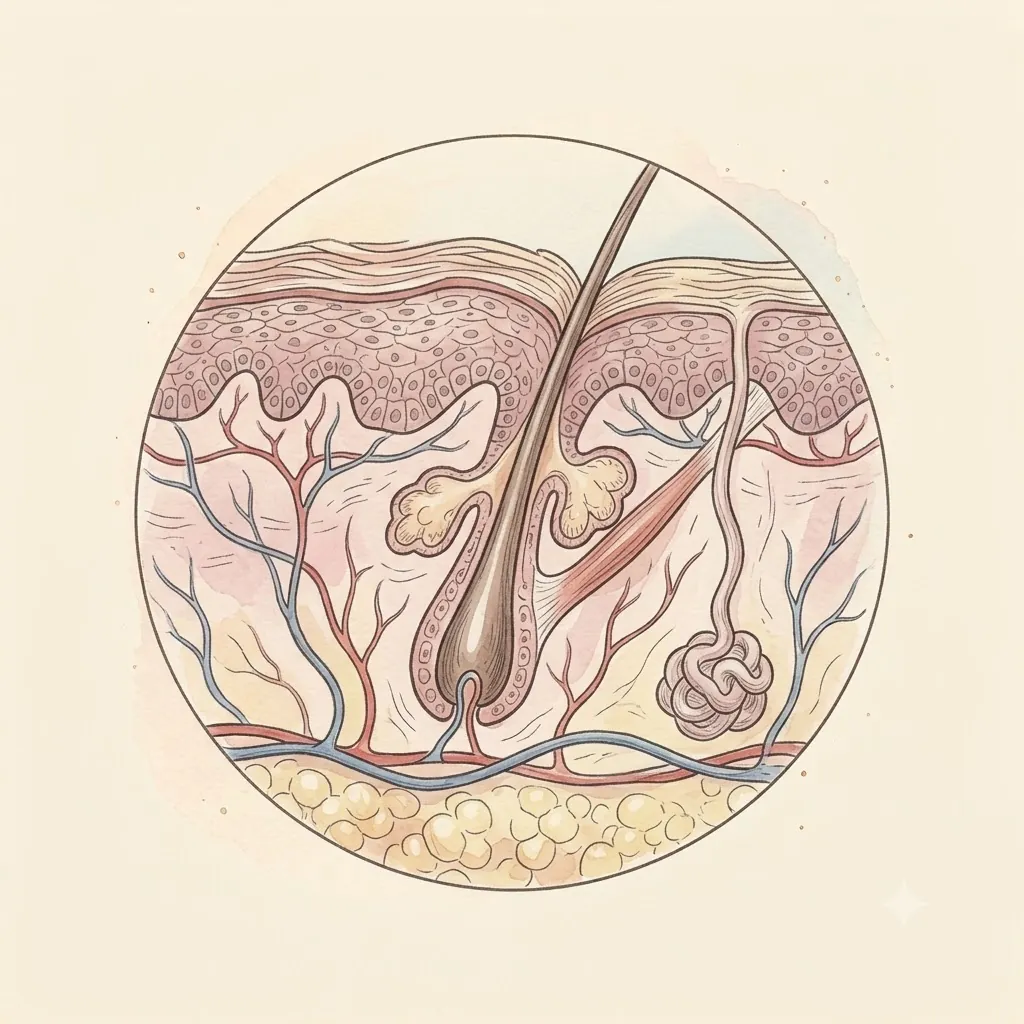 Guided walk-throughGuided dissection: skin
Walk the skin structure by structure, then cut inward layer by layer.
6 min Memo cardsSkin memo cards
Turn the cards on the skin — structures, layers, key facts — and grade yourself.
4 min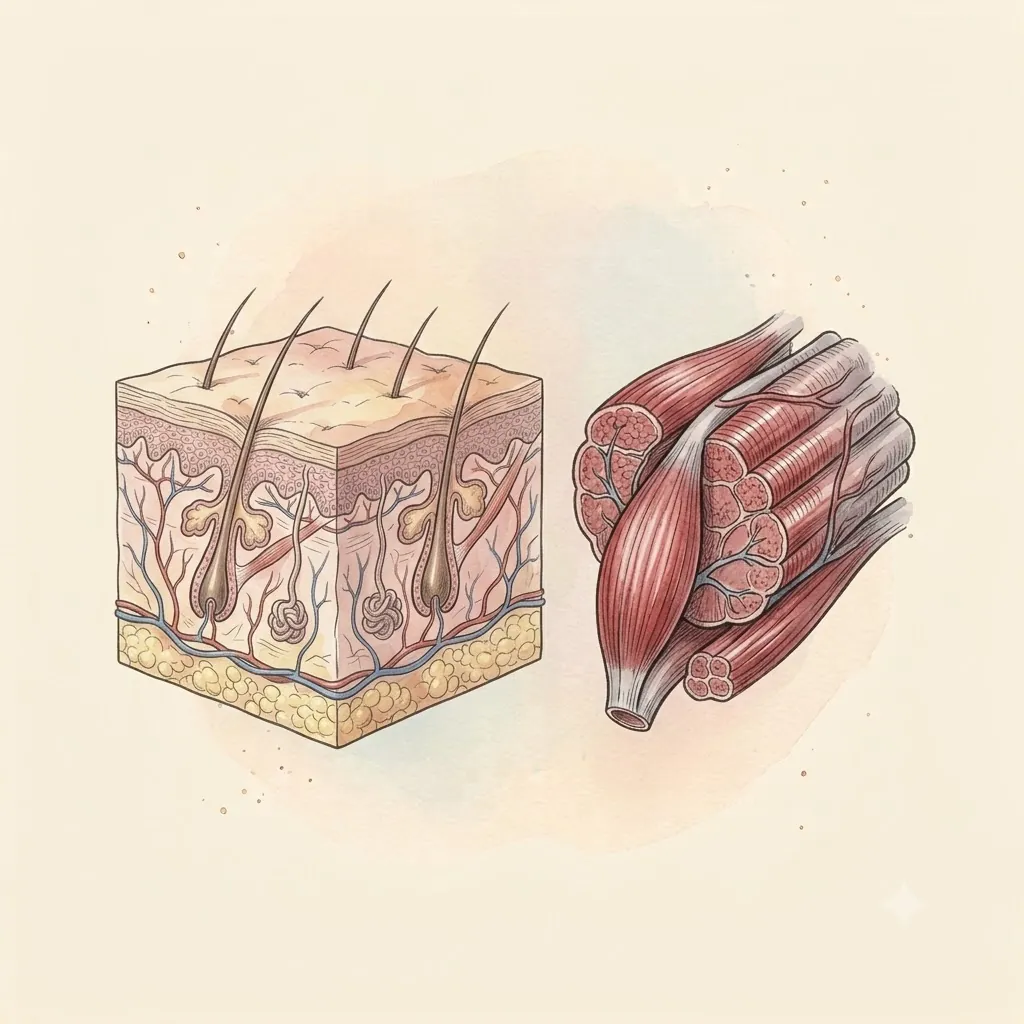
 Multiple choiceSkin quiz
A multiple-choice round on the skin, reshuffled every time.
4 min Click on the 3D modelFind the skin structures
Click the named structures directly on the live 3D skin.
5 min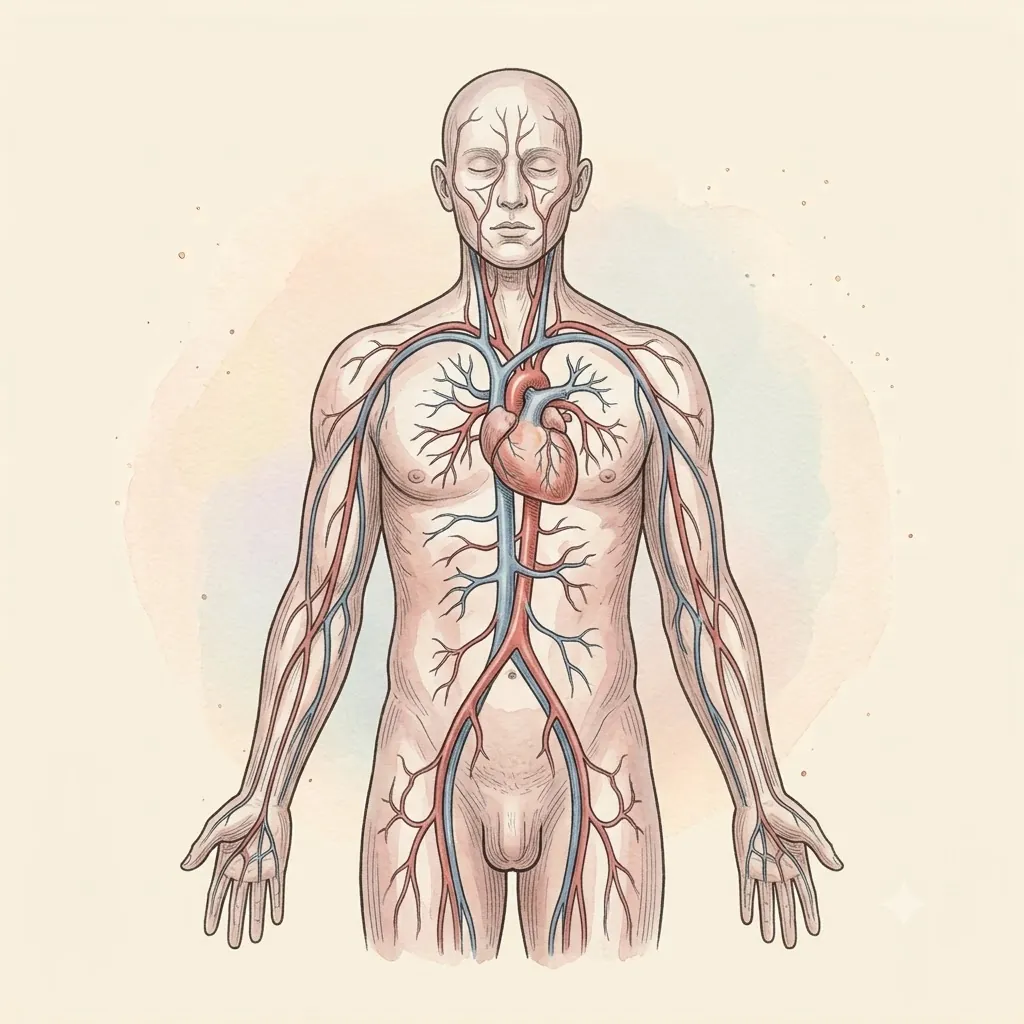 Multiple choiceIntegumentary System quiz
A quiz pulling from every organ in the integumentary system.
3 min Match layersMatch skin layers
Pair each layer of the skin, outside in, with what it does.
4 min Match pairsMatch skin structures
Pair each structure in the skin with its role.
4 minReadSkin in the clinicWhere the skin shows up in the clinic, and what goes wrong.
3 min