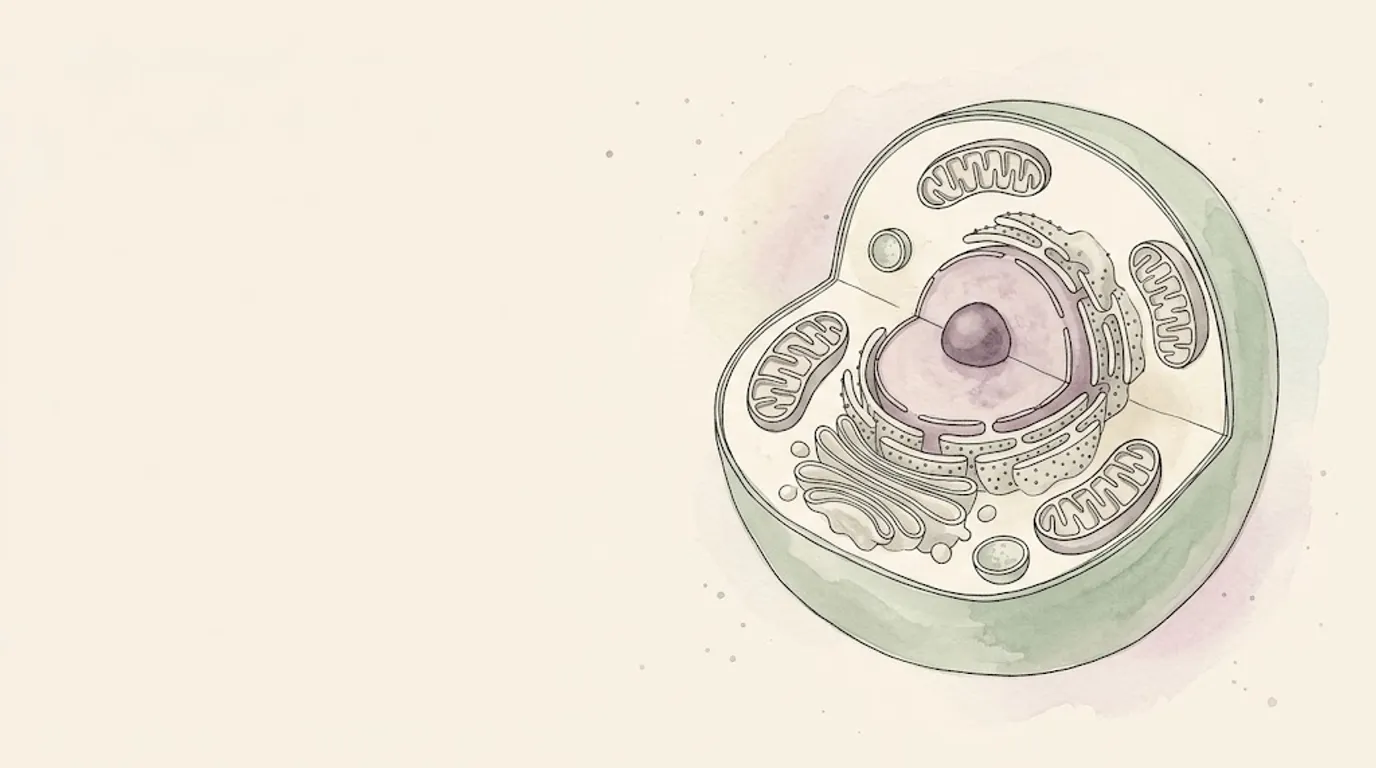
Cell biology
The cell as the shared unit underneath every organ this course covers.
The path through this topic
0 of 9 steps done.
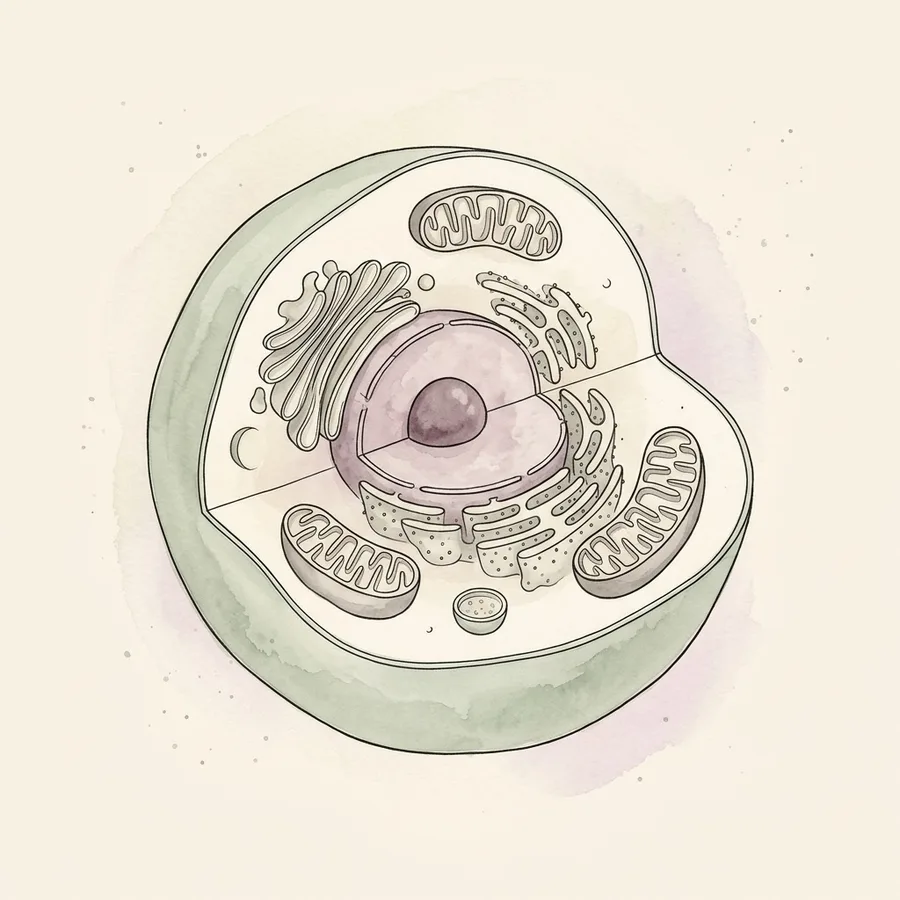 ReadThe plasma membrane and how things cross it
Why the membrane holds together at all, and the four ways a molecule can get through it.
5 min- ReadThe organelles and the secretory pathway
Follow one protein from its gene to the outside of the cell, and meet each organelle where it does its work.
6 min - ReadCytoskeleton, junctions and the matrix
What gives a cell its shape, what holds it to its neighbours, and what happens clinically when either fails.
5 min - ReadThe cell cycle, mitosis and cell death
How a cell copies itself, what stops it doing so at the wrong moment, and how it dies on purpose.
6 min - Memo cardsCell biology: memo cards
The whole of cell biology as a deck: prompt on the front, answer on the back.
4 min  Multiple choiceCell biology: membrane and organelles
Transport, the secretory pathway and what each organelle actually does.
5 min Match pairsMatch the organelles
Pair each organelle with the job it does.
4 min- Multiple choiceCell biology: harder cases
Junctions, checkpoints, apoptosis and receptor mechanisms.
4 min  Put in orderOrder the cellular sequences
Rebuild the secretory pathway and the phases of mitosis in the order they happen.
5 min
The molecules behind this subject
Real structures, at the scale this chapter happens on. Rotate them on the Mechanisms page.
- An enzyme closingThe only entry here that moves. Two crystal structures of one enzyme — shut on its substrate, and open — with the travel between them measured rather than imagined.1AKE
- Tubulin and taxolThe protein that builds the mitotic spindle, and a drug that works by refusing to let it be taken apart.1TUB
- HMG-CoA reductase and atorvastatinA statin does not remove cholesterol. It stops the liver making it, at the one step that commits.1HWK
In 3D: the Cell Lab
The cells from this course, built in 3D and cut open: touch their organelles to read their job and how they look under the microscope, then practise finding them.
Open the Cell Lab